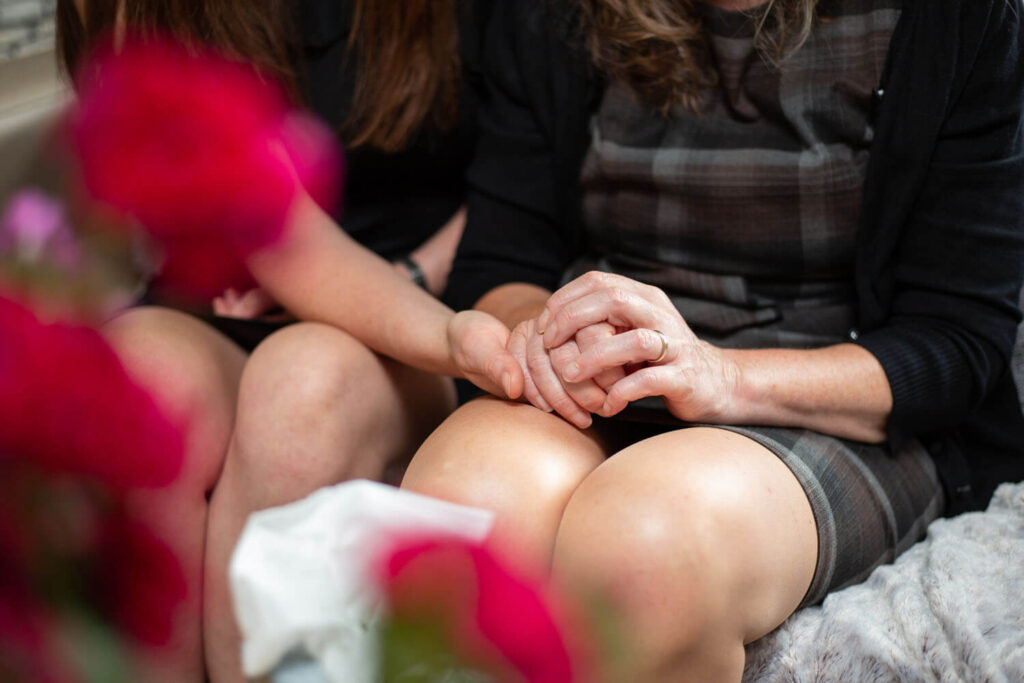
Gentle guidance and resources to help you navigate life after loss.
20+
Years Of Experience
5+
Team Members
2
Premises
Support through grief & healing
Planning a funeral is a busy time for a grieving family. It is also a way of restoring control after the loss of a loved one; the rituals involved can make it easier for people to cope with their grief.
But what happens after your loved one has been laid to rest? That’s when friends and family often feel overwhelmed. It is when a deep sense of sadness and loneliness can set in. Many people are often reluctant to talk to friends and family members about this, not wanting to be a burden on them. But there is no time limit on such feelings or for when, whether and how deeply we will feel loss.
Every one of us will manage our grief in a uniquely individual way. Research has shown that it can take more than two years for people to feel ready to move forward with their lives following bereavement, and that women, on average, grieve for longer than men.
It’s important to know that help is at hand. Many organisations offer support to people who have suffered bereavement; it can include counselling, information and advice, or practical support.
If you, or someone you know, might benefit from support, why not contact one of these organisations?
Cruse Bereavement Care Scotland: 0808 802 6161
Samaritans: 116123
War Widows’ Association of Great Britain: 0845 2412 189
Silver Line Scotland: 0800 470 8090
Other useful organisations
Roman Catholic Diocesan Centre: 01382 225453
Church of Scotland Presbytery: 01350 727249
Dundee Central Mosque: 01382 200833
Dundee Crematorium: 01382 827259
Perth Crematorium: 01738 459660
Police (non-emergency): 101
139
We use cookies to ensure that we give you the best experience on our website. If you continue to use this site we will assume that you are happy with it.